
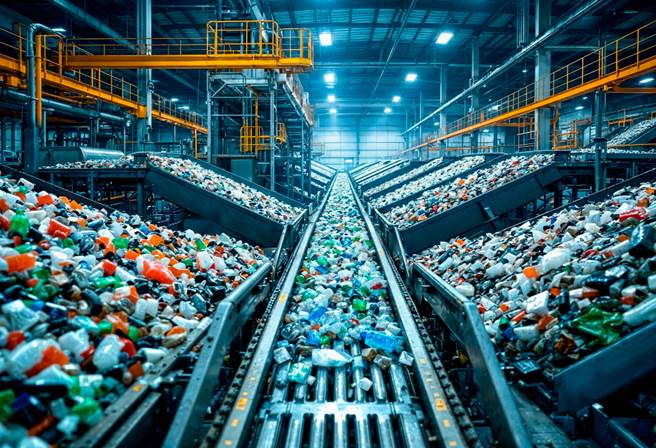
Electronic waste (also known as e waste) is among the fastest growing types of waste in India due to increased digital adoption, shorter products life, and increased consumption of electrical and electronic equipment (EEE). India has emerged as one of the largest manufacturers of e waste in the world, producing 1.6-1.7 million tonnes of e waste each year, however, most of it continues to be handled informally with unsafe handling methods that damages human health and the environment.
This blog unwinds the overall procedure of establishing formal e waste recycling plant in India, as well as site planning, regulatory, licensing, compliance, and tips that can help an entrepreneur and environmental manager.
1. Why E Waste Recycling is Important in India.
It is also necessary to know about the environmental and economic reasoning behind the process before throwing oneself into it:
Environmental Imperatives
- E waste includes toxic materials like lead, mercury, cadmium and brominated flame retardants that can be harmful to soil, air and water when poorly managed.
- Informal recycling (open burning, acid leaching) is very common in most parts of India and it exposes the workers and the local society to toxins.
Economic Potential
- Electronic devices: valuable recoverable resources include copper, aluminium, iron, plastics, precious metal (gold and silver) that are required as inputs to be reused by industries.
- Emerging formal recyclers can also make money by selling recovered materials as well as by issuing EPR (Extended Producer Responsibility) certificates to producers as a demonstration of compliance with recycling.
Policy Push and Circular Economy.
The new E Waste (Management) Rules by the Government of India, 2022, which will take effect on 1 April 2023, has radically changed the manner in which e waste is to be handled, managed, and reported. The rules are meant to formalize recycling ecosystems, minimize environmental impact, and enhance the notion of circularity.
2. Understanding the Regulatory Framework
The establishment of an e waste recycling facility in India is a multi tier regulatory environment and it involves:
A. Central Pollution Control Board (CPCB).
- Authority that controls e waste in accordance with the 2022 Rules.
- Mandates all recyclers to open up on the CPCB EPR Portal prior to dealing with any e waste.
- Manages the national monitoring, reporting, and issuing of EPR certificates.
B. State Pollution Control Boards (SPCBs).
- Provide environmental approvals such as Consent to Establish (CTE) and Consent to Operate (CTO).
- Also grant hazardous waste authorizations, safe handling of hazardous fractions.
C. Other Applicable Laws and Authorities.
- Factories Act, 1948 (worker safety and industrial standards).
- Protection (Environment) Act, 1986 (widespread environment compliance).
- Fire Department (NOC fire systems).
- Local Municipal and Building Authorities (building plan approvals and land use).
3. Plant setup Process step by step.
Developing an effective and compliant e waste recycling plant includes several consecutive steps:
Step 1- Feasibility Study and Project Planning.
A Detailed Project Report (DPR) is necessary and must include:
- Types of e waste to process (mobile phones, laptops, TVs, batteries).
- Annual capacity planning (e.g., 1150 MT/day, depending on the scale).
- Market analysis and profit potential of recycled output and EPR transactions.
- Selection of technology (manual dismantling or mechanical + hydrometallurgical systems).
Feasibility will guarantee that the supply capacity of the plant corresponds to both the availability of supply in the area and the demand of the customers.
Step 2 — Zoning Approval and Land Selection.
- Choose industrial zoned land that is acceptable to waste processing.
- Good transport connection and easy access to utilities (electricity, water).
- Land should not be so near habitation areas, but comply with environmental lot line standards.
- Municipal and local authority authorizations to land use are obligatory.
Step 3 — Environmental Clearances (SPCB) Application.
The construction and processing activities cannot start without SPCB permissions.
3.1 Consent to establish (CTE)
- Before establishing or installing any infrastructure, the first environment approval is necessary.
- Tests feasibility of the project, pollution control, waste management, and layout.
- Approximately 30- 90 days, state-specific.
3.2 Consent to Operate (CTO)
- Issued following plant set and installation.
- Concentrates on real preparedness – pollution control systems, trained personnel, SOPs and safety systems.
- Normal turnaround times are between 30 and 60 days on inspection.
3.3 Hazardous Waste Authorization
Recyclers should also be capable of obtaining permission to process toxic fractions such as PCBs and batteries under Hazardous and Other Wastes Rules.
Can be included along with CTE/CTO applications.
Step 4 – Signing up at CPCB EPR Portal.
Before any waste material is processed, all e waste recyclers should be registered on the national CPCB EPR portal. It is a national and computerized network that replaces numerous local licenses previously used.
The most important facts concerning registration:
- Recyclers key in information regarding installed capacity, equipment, processes and compliance commitments.
- Documents that are needed are CTE/CTO certificates, GST and PAN, geo tagged plant videos/photos, and self declarations of safety compliance.
- The recyclers fee is usually 15,000 5-year validity (renewal and maintenance fees are charged).
Step 5 – Construction of the Facility and the purchase of Machinery.
Once CTE is obtained, you can:
- Construct the plant based on the approved layout plans.
- Install and equip special equipment: dismantling tables, shredders, magnetic separators, cable strippers, dust collectors and metal recovery units.
- Installation of pollution control systems (scrubber, effluent treatment units) and fire safety systems.
Step 6 – Inspection and Compliance Check.
Once physically set up, and prior to operations:
- Refer to SPCB Plant inspections, to issue CTO and complete hazard authorizations.
- CPCB can also seek virtual or physical verification to check geo tagged evidence provided during registration.
Step 7 — Start Operations and EPR Certificate Generation.
When operational licenses are established:
- The e waste can be accepted by recyclers, recycled, and EPR certificates created and bought by the producers to meet their recycling requirements.
- The records of mass balance, metal recovery, and quarterly returns are required to be submitted via the portal of CPCB.
4. Licenses and Compliance at a Glance
Establishing an e-waste recycling facility in India will need various licenses and approvals by various authorities to make it legally and environmentally acceptable. It starts with Consent to Establish (CTE) of the State Pollution Control Board (SPCB) prior to construction, Consent to Operate (CTO) once the setup is finished and only before the commencement of the operations to monitor compliance with the operations. To authorise legally, recycler of e-waste should be registered with the CPCB prior to handling any waste. Also, Hazardous Waste Authorization by SPCB is necessary to manage toxic materials safely.
Both businesswise and operationwise, a Factory License issued by the Labour Department is required to hire workers to provide safety at the workplace, whereas a Fire NOC issued by the Fire Department is required before operations are conducted to maintain fire safety measures. Before construction, Building Plan Approval by the local authorities is needed to make sure that land and structure are compliant. Moreover, e-waste business requires registration under GST following company incorporation in terms of taxation, and Shop and Establishment registration is required following setup to run the business premises legally.
5. Compliance Requirements and Reporting.
- Environmental & Safety SOPs
- Written standard operating procedures (SOPs) on materials handling, pollution control, safety of workers and emergency response.
- Occupational health (ventilation, PPE, safety signs).
- Periodic monitoring of the environment (air, effluent, noise).
CPCB Portal Return Filing.
Recyclers must file:
- Quarterly Returns: Within 30 days of the end quarter.
- Annual Returns: At the end of June every year, the information about the volumes processed, and materials recovered.
Any suspension or even revocation of registration can occur in case of failure to file or comply.
6. Penalties & Enforcement
The use of non-valid licenses or registration is a severe crime according to the E Waste (Management) Rules and the Environment (Protection) Act, 1986. Consequences include:
- Reimbursements of lakhs to crores on breaches.
- CPCB/SPCB ordered closures or halting of production.
- In extreme situations, equipment or raw materials are seized.
- Ban on issuing, or selling EPR certificates.
Timely reporting and documentation minimize the risks significantly.
7. Real-World Advice to Entrepreneurs.
Investment & Cost Factors
- Small plants (13 MT/day) can be initiated with medium investment.
- Medium or large facilities (10-50 MT/day) require capital (machinery, pollution control and safety systems and land) in large amounts.
Supply Chain & Sourcing
- Collaborate with official e waste disposal facilities, manufacturers and refurbishers.
- Enter into long term waste supply contracts to have regular feedstock.
Technology & Innovation
- Machinery: Manual lines of dismantling, automated sorting, shredding and metal recovery are added to create efficiency.
- The developed systems raise the recovery rates and profitability.
Market & Revenue Streams
- Resale of metals (copper, aluminium, steel).
- EPR certificates were sold to manufacturers.
- Value added recovery (precious metals of PCBs).
- Destruction of data and re-sale of used parts.
8. Wider Framework: National Problems and Infrastructure.
The e waste infrastructure in India has loopholes:
- There are states that do not even have registered recyclers (e.g., Delhi has no registered recyclers, however, it produces a lot of e waste).
- Government programs, such as creating special e waste parks (e.g., in the town of Holambi Kalan, in Delhi) are supposed to address the formal recycling void and establish viable standards.
This is an indication that more opportunities are opening to compliant recyclers that are able to comply with the regulatory and operational requirements.
Conclusion
The establishment of a recycling centre of e waste in India is an opportunity as well as a social necessity. It is highly controlled and must be planned, licensed by sequence and heavily enforced but properly done, it will bring environmental benefits and economic payoffs.
The major success factors are:
- Early planning and feasibility study.
- Environmental clearances (CTE/CTO/Hazardous Authorizations) in time.
- Electronic registration and reporting on CPCB EPR portal.
- Good safety and pollution control mechanisms.
- Regular returns and quality reporting.
Through following these guidelines and in compliance with E Waste Management Rules in India, the entrepreneurs will be able to make a positive impact on sustainable waste solutions and establish a profitable business in the era of the circular economy.